Tray specs
Seed Tray Cell Sizes Explained
Which cell count suits which crop, and how to tell a seedling has outgrown its cell.
Quick answer
Use 128-cell trays for small, fast crops (lettuce, herbs, onions), 72-cell trays as the everyday all-rounder, and 50- or 32-cell trays for tomatoes, peppers and other crops that stay indoors longer. Squash, cucumbers and melons do best in single large cells or biodegradable pots.
Seed tray cell size chart
These are typical sizes for inserts made to fit a standard 1020 (about 10 × 20 inch) base tray. Exact measurements vary by brand, so treat them as a guide and check each listing.
| Cells per tray | Approx. cell width | Best for | Pot on or plant out |
|---|---|---|---|
| 200 | about ¾ in (2 cm) | Microgreens-style plugs, onions, very dense herb sowings | Early — 2–4 weeks |
| 128 | about 1 in (2.5 cm) | Lettuce, herbs, onions, leeks, brassicas | 3–5 weeks |
| 72 | about 1½ in (3.5–4 cm) | Most vegetables and flowers; tomatoes for a short stay | 4–6 weeks |
| 50 | about 2 in (5 cm) | Tomatoes, peppers, aubergines, larger brassicas | 5–8 weeks |
| 32 | about 2½ in (6 cm) | Tomatoes and peppers held longer, early cucurbits | 6–8+ weeks |
| 6–18 (large inserts) | 3 in (7.5 cm) and up | Squash, cucumbers, melons, potting on | When roots fill the cell |
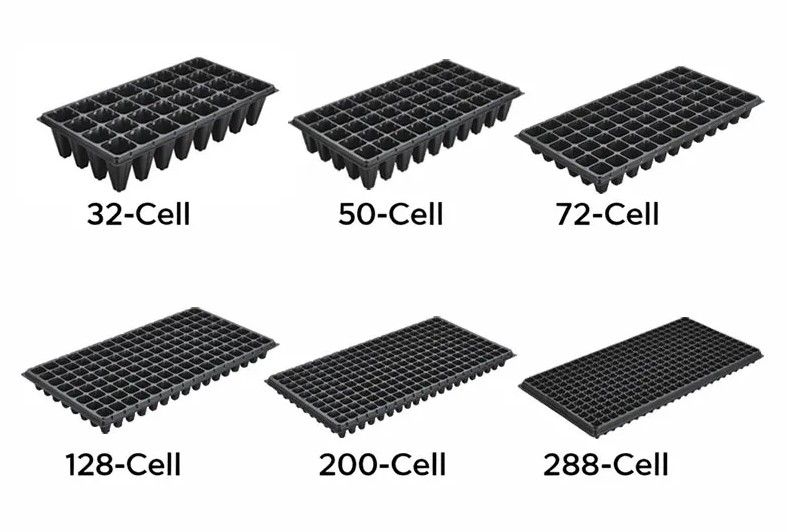
72-cell vs 128-cell trays
A 128-cell tray fits nearly twice as many seedlings in the same space, which is ideal when shelf or grow-light area is tight and you are raising quick crops like lettuce. The trade-off is less mix per plant: cells dry out faster, need watering more often, and seedlings run out of room sooner. A 72-cell tray is more forgiving for beginners and suits a wider range of crops. If you're only buying one size, make it 72.
Deep vs shallow cells
Two trays with the same cell count can hold very different volumes of mix. Deeper cells buffer moisture swings and suit deep-rooted crops like tomatoes. Shallow cells are fine for lettuce and herbs that are transplanted young. If a listing doesn't give depth, compare product photos side on.
How to tell a seedling has outgrown its cell
- Roots are circling the outside of the plug or poking out of the drainage hole.
- The cell dries out within a day of watering.
- Lower leaves yellow even though light and watering are fine.
- Growth stalls while the plant still has weeks before planting out.
When you see these signs, transplant into the garden if the weather allows, or pot on into a bigger container.
Cell size by crop
| Crop | Suggested cell | Note |
|---|---|---|
| Tomatoes | 50- or 32-cell, or start in 72 and pot on | Fast roots; often potted on once |
| Peppers & chillies | 50- or 32-cell | Long indoor season; grow slowly early on |
| Lettuce | 128- or 72-cell | Transplant young for best results |
| Cucumbers & squash | Large single cells or fibre pots | Dislike root disturbance; short indoor time |
| Onions & leeks | 128-cell, several seeds per cell | Can be multi-sown and planted as clumps |
| Herbs (basil, parsley) | 72- or 128-cell | Several seeds per cell for bushy clumps |
Next step: compare seed starter trays in each size, or read our buying guide.
Cell size FAQs
What size cells for tomato seedlings?
50- or 32-cell trays are a good fit, or start in 72 cells and pot on after a few weeks.
Is a 72- or 128-cell tray better?
72 is more forgiving and suits more crops. 128 fits more seedlings but cells dry out faster and need transplanting sooner.
How big is a 72-cell tray cell?
Typically about 1½ inches (around 3.5–4 cm) across, depending on the brand.
What happens if seed tray cells are too small?
Seedlings become root-bound, dry out quickly and may stall. Transplant or pot on when roots circle the plug.