Growing guide
How to Start Seeds in Seed Starter Trays
From pre-moistening the mix to planting out — ten steps, a timing chart and a printable checklist.
Quick answer
Fill clean cells with pre-moistened seed-starting mix, sow one to three seeds per cell at the packet depth, cover with a dome and keep warm. When sprouts appear, vent the dome and give 14–16 hours of strong light. Water from below, thin to one seedling per cell, and harden off for one to two weeks before planting out.
When to start seeds indoors
Count back from your average last frost date. Typical lead times:
| Crop | Sow indoors |
|---|---|
| Peppers, chillies, aubergines | 8–10 weeks before last frost |
| Tomatoes | 6–8 weeks before last frost |
| Brassicas, lettuce, onions | 4–8 weeks before last frost (cool-season crops can go out earlier) |
| Cucumbers, squash, melons | 3–4 weeks before last frost |
US gardeners can look up their frost dates through their state extension service; UK gardeners can use local frost-date data or the RHS's regional advice.
What you need
- Seed starter tray with drainage holes, plus a solid base tray
- Humidity dome (or clear plastic film)
- Fine seed-starting mix (not garden soil or heavy potting compost)
- Seeds, labels and a pencil or waterproof marker
- A bright south-facing window or a grow light
- Optional: heat mat, small fan, spray bottle
Step-by-step: starting seeds in trays
- Clean the trays. Wash reused trays and sterilise them to avoid carrying over disease. See how to clean seed trays.
- Pre-moisten the mix. Add warm water to the mix in a bucket and stir until it feels like a wrung-out sponge — damp, not dripping.
- Fill the cells loosely. Overfill, then scrape level with the top of the tray. Tap once on the bench to settle. Don't press it down hard.
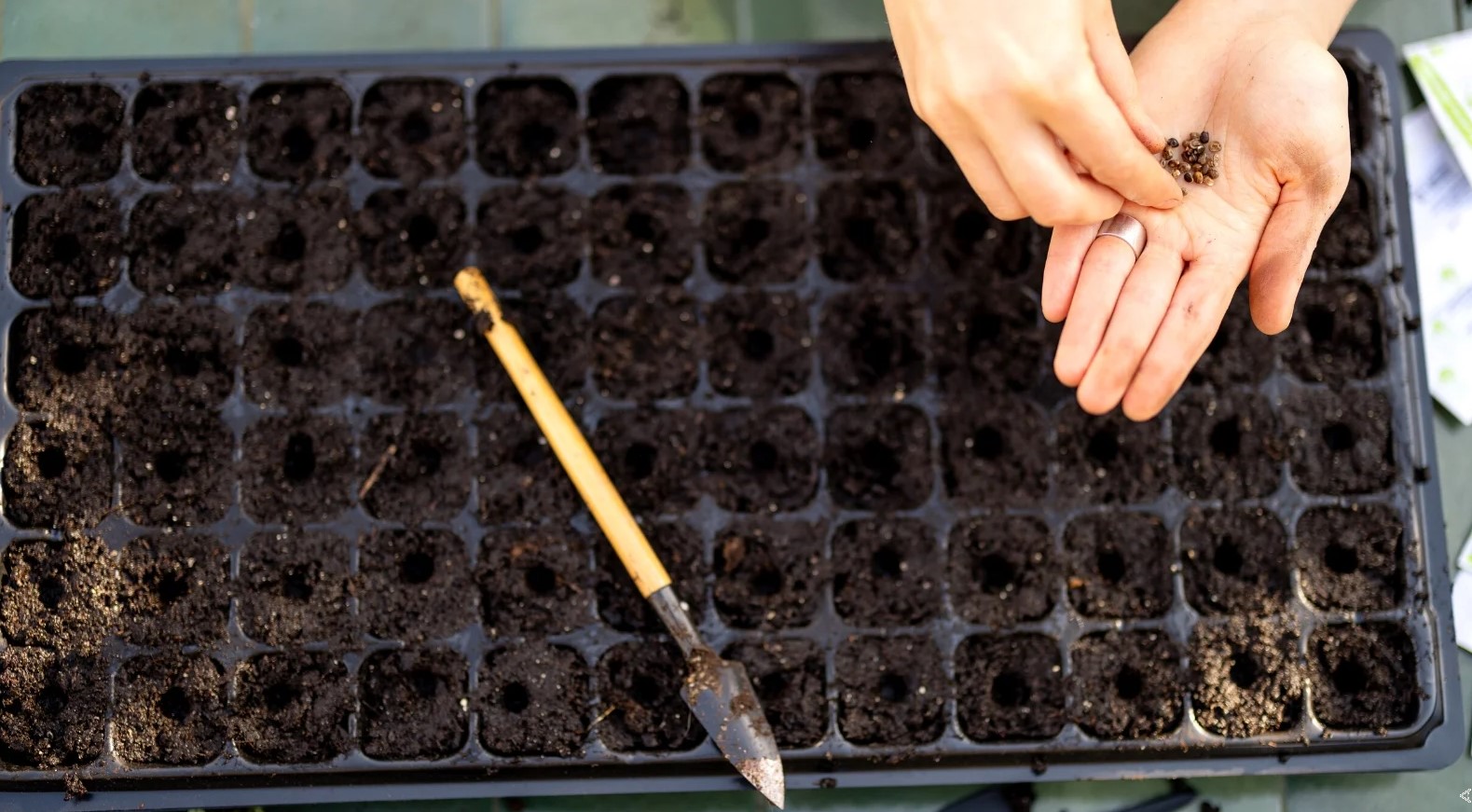
- Make a planting hole. Use a pencil or dibber to press a hole at the depth on the packet — usually two to three times the seed's width. Tiny seeds sit on the surface.
- Sow one to three seeds per cell. More than one guards against poor germination; you'll thin later. Larger seeds can go in singly.
- Cover and label. Brush mix over the seeds, mist the surface and label every row immediately.
- Dome on, keep warm. Place the dome on top and keep the tray somewhere warm. Many vegetable seeds germinate well around 70–75°F (21–24°C); a heat mat helps peppers and tomatoes in cool rooms. Light isn't needed yet for most seeds.
- Vent the dome and add light at the first sprouts. Open the vents, then remove the dome over a day or two. Give 14–16 hours of light; keep LED grow lights at the height the maker recommends and raise them as seedlings grow.
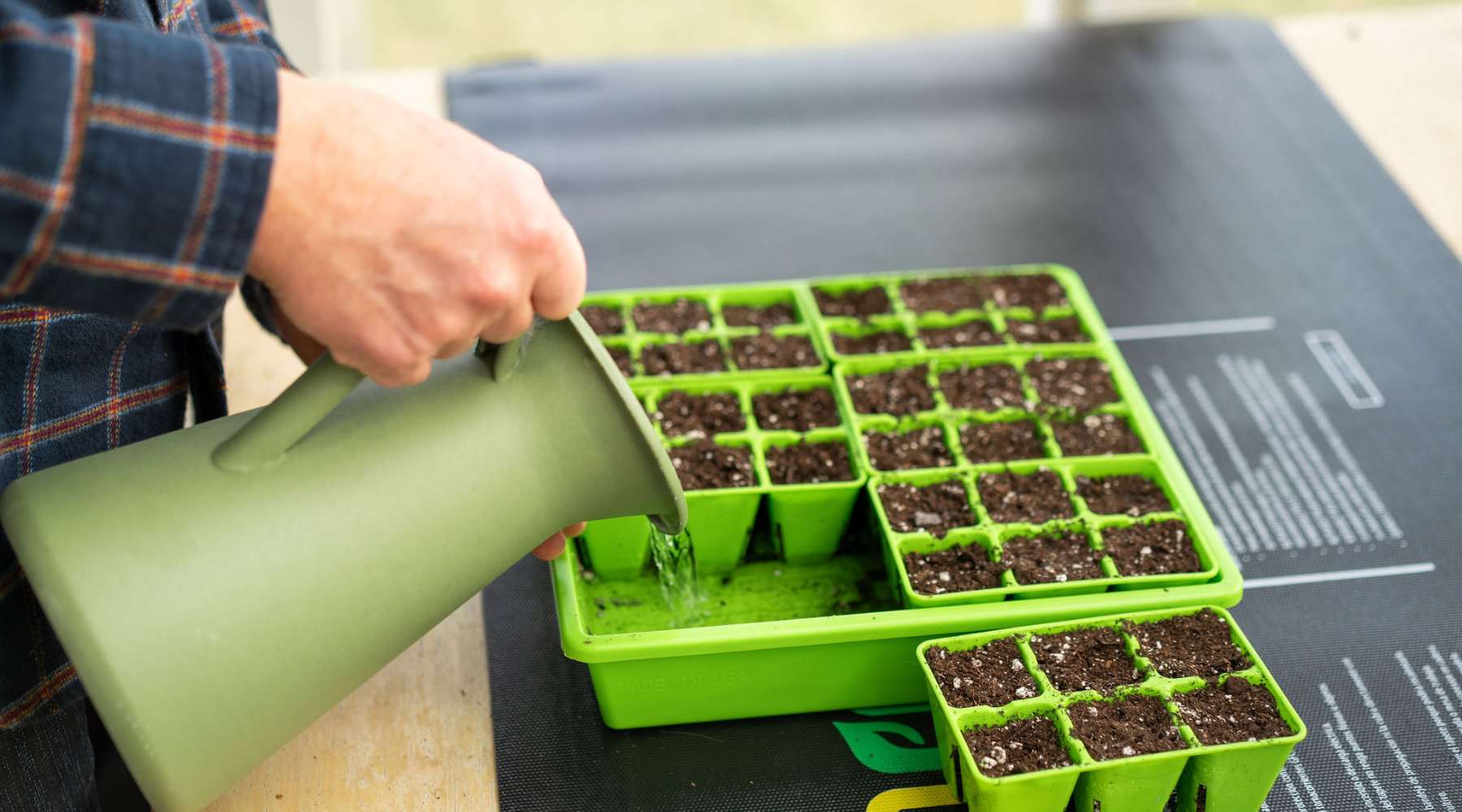
- Water from below and thin. Pour water into the base tray, let the cells drink for 20–30 minutes, then tip out the rest. Snip extra seedlings at soil level so one strong plant remains per cell.
- Feed, then harden off. Once true leaves appear, feed with a diluted liquid fertiliser if your mix has none. One to two weeks before transplanting, set seedlings outside for a short time each day, increasing exposure gradually.
How to water seedlings in trays
Bottom watering is gentlest: it keeps the surface drier (less damping-off and mould) and doesn't knock tiny seedlings over. Lift the tray to judge weight — a light tray needs water, a heavy one doesn't. Avoid letting the cells sit in water for hours.
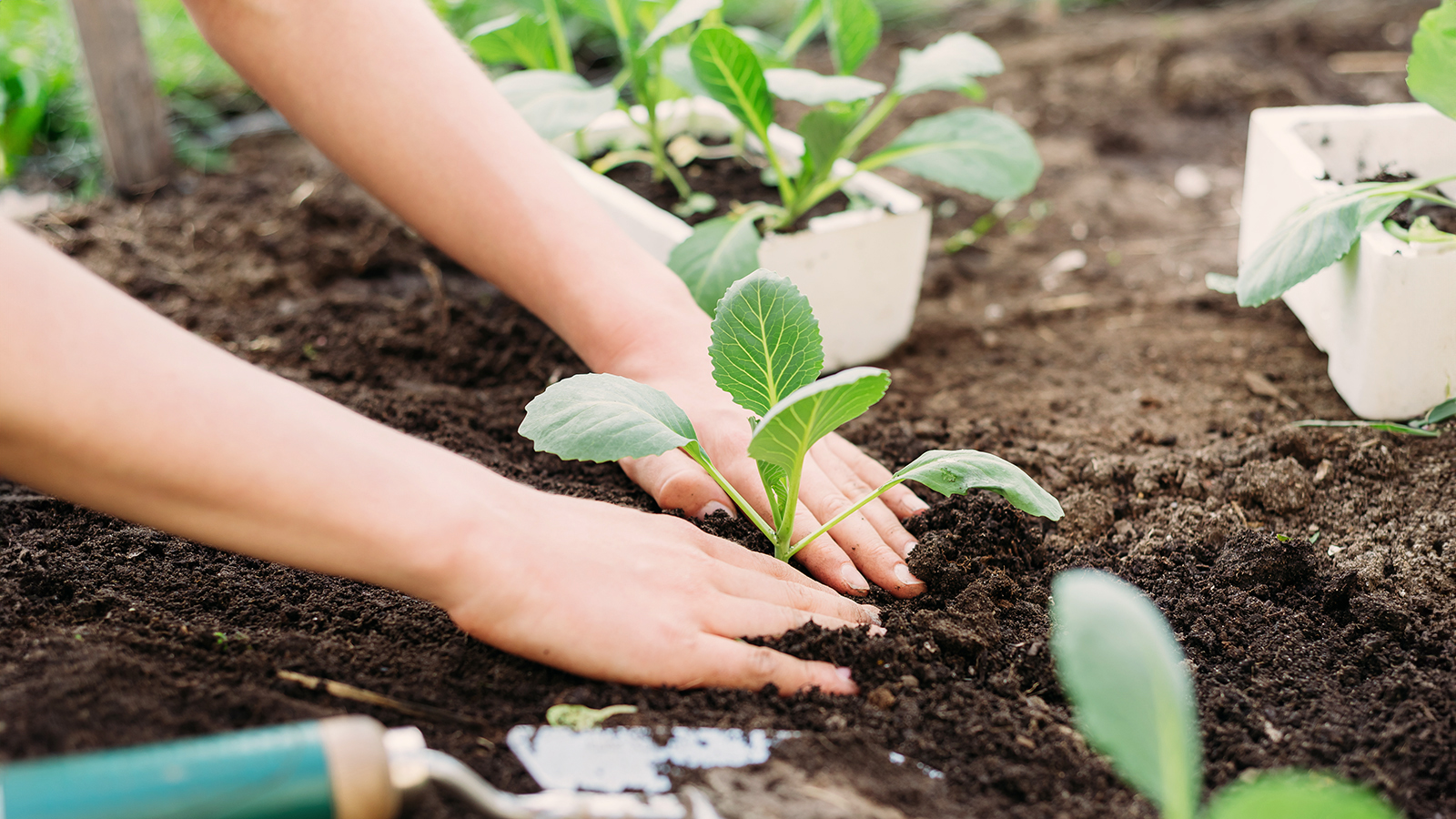
Transplanting seedlings from trays
Water the tray an hour before transplanting so plugs slide out cleanly. Push from the bottom of the cell with a pencil or squeeze the cell sides rather than pulling on the stem — if you must hold the plant, hold it by a leaf. Plant at the same depth (tomatoes can go deeper), firm gently and water in.
Common mistakes
- Using garden soil, which compacts and can carry disease.
- Leaving the dome on after germination — the main cause of mould and damping-off.
- Too little light, which produces tall, pale, floppy seedlings.
- Sowing too early, so plants become root-bound before it's warm enough outside.
- Skipping hardening off, which leads to scorched or wind-damaged transplants.
Something went wrong? See seed starting problems and fixes.
Printable seed-starting checklist
Tick items as you go — they're saved in this browser. Then print or save as PDF.
Before sowing day
Sowing to transplant
FAQs
How many seeds should I plant per cell?
One to three. More than one guards against poor germination; thin to the strongest seedling afterwards. Onions and some herbs can be multi-sown.
How deep should I plant seeds in trays?
Follow the packet. A common rule is two to three times the seed's width; very tiny seeds go on the surface.
When should I remove the humidity dome?
As soon as most seeds have sprouted. Open the vents first, then remove it over a day or two.
How often should I water seedlings in trays?
When the tray feels light or the surface is starting to dry — often every day or two. Bottom watering is gentlest.
How long do seedlings stay in starter trays?
From about three weeks for cucumbers and squash to eight to ten weeks for peppers, depending on cell size and crop.