Buying guide
Best Seed Starter Trays in 2026: Top Picks by Use
Eight picks organised by the job you need a tray to do, with the features to check before you buy.
Affiliate note: links marked Shop Now go to Amazon. If you buy, we may earn a small commission at no extra cost to you. It never changes what we recommend. How we earn money.
Quick answer
The best seed starter tray for most gardeners is a heavy-duty, reusable 72-cell insert in a solid 1020 base tray with a vented humidity dome. Go bigger (32–50 cells or 6-cell inserts) for tomatoes and peppers, smaller (128 cells) for lettuce, herbs and onions, and choose fibre or paper pots for cucumbers and squash that dislike root disturbance.
How we chose these
These picks are research-based, not hands-on lab tests. We compared tray types against the same ten criteria — price per cell, cell count, cell size and depth, material, rigidity, drainage, accessories, fit with standard trays, best use and limitations — using manufacturer specifications, extension-service guidance and recurring patterns in verified buyer reviews. Each pick links to current listings so you can compare live prices and sizes.
Best seed starter trays at a glance
| Pick | Cells | Best for | Shop |
|---|---|---|---|
| Heavy-duty reusable 72-cell tray kit | 72 | Most home gardeners who sow every spring | Shop Now |
| All-in-one seed starting kit with dome | 12–72 | First-time seed starters | Shop Now |
| Deep 32- or 50-cell seed tray | 32–50 | Tomatoes, peppers, aubergines | Shop Now |
| Self-watering seed starter with capillary mat | 12–40 | Busy growers, holidays, even moisture | Shop Now |
| Biodegradable fibre or paper seed pots | Pots / strips | Cucumbers, squash, melons, sweetcorn | Shop Now |
| Compact windowsill propagator | 12–24 | Apartments, windowsills, small batches | Shop Now |
| 128-cell plug trays | 128 | Lettuce, onions, herbs, succession sowing | Shop Now |
| Soil blocker | Blocks | Plastic-free and market-garden style growing | Shop Now |
#1 · Best overall
Heavy-duty reusable 72-cell tray kit
A rigid 72-cell insert in a solid base tray with a tall, vented dome covers almost every crop you'll start indoors. Heavy-duty versions cost more upfront but are designed to be washed and reused for many seasons, which brings the cost per cell down below cheap disposable inserts.
Why we like it
- Versatile cell size for vegetables, herbs and flowers
- Stays rigid when lifted full and wet
- Bottom-watering friendly with a solid base tray
- Fits standard heat mats, shelves and lights
Watch out for
- Higher upfront price than thin inserts
- Cells are small for tomatoes held longer than 6 weeks
Check the listing for: thick, rigid plastic; a drainage hole in every cell; solid 1020 base tray; vented dome
Skip it if: you only grow a few tomato plants a year — a small large-cell kit is enough.
Shop Now on Amazon#2 · Best for beginners
All-in-one seed starting kit with dome
Kits bundle the insert, base tray, dome and often labels, so there's nothing to match up. They're a low-risk way to learn the basics before investing in heavy-duty equipment.
Why we like it
- Everything needed in one box
- Usually inexpensive
- Dome makes germination more reliable
Watch out for
- Many kit inserts are thin and short-lived
- Domes may be too low once seedlings grow
Check the listing for: included base tray and dome, height of dome, number of cells, whether labels are included
Skip it if: you already own base trays and domes — buy inserts only.
Shop Now on Amazon#3 · Best for tomatoes & peppers
Deep 32- or 50-cell seed tray
Long-season fruiting crops spend 6–10 weeks indoors. Bigger, deeper cells give their roots room so you can skip or delay potting on, and they dry out less often.
Why we like it
- Room for strong root systems
- Fewer waterings than small cells
- Often lets you skip one potting-on step
Watch out for
- Fewer plants per tray
- Uses more mix
Check the listing for: cell depth (deeper is better), cell width around 2–2½ in, rigid walls
Skip it if: you mainly grow lettuce and herbs — the space is wasted.
Shop Now on Amazon#4 · Best for bottom watering
Self-watering seed starter with capillary mat
A reservoir and capillary mat wick water up into the cells, keeping moisture steady between top-ups. That's useful if you're out all day or prone to forgetting.
Why we like it
- Even moisture with less checking
- Keeps the surface drier than top watering
- Good for small seeds that wash out easily
Watch out for
- Can keep mix too wet if the reservoir is overfilled
- Mats need cleaning to avoid algae
Check the listing for: reservoir size, capillary mat or wick design, ability to drain excess
Skip it if: you prefer full control and check seedlings daily anyway.
Shop Now on Amazon#5 · Best biodegradable
Biodegradable fibre or paper seed pots
Plant the whole pot and the roots are never disturbed — ideal for crops that sulk after transplanting. Pair them with a solid tray so they don't dry out on the edges.
Why we like it
- Minimal root disturbance
- No trays to wash
- Peat-free options available
Watch out for
- Single use
- Walls dry out quickly
- Can break down slowly in cold, dry soil
Check the listing for: material (coir, paper, wood fibre; peat-free if that matters to you), pot size, whether a holding tray is included
Skip it if: you want to reuse the same equipment year after year.
Shop Now on Amazon#6 · Best for small spaces
Compact windowsill propagator
Narrow propagators fit a windowsill or a small shelf and raise enough seedlings for a balcony or a few raised beds.
Why we like it
- Fits tight spaces
- Easy to move and turn toward light
- Often comes with vents
Watch out for
- Limited capacity
- Windowsill light alone can cause leggy seedlings
Check the listing for: overall footprint, dome height, vents, whether it fits your sill depth
Skip it if: you plan to grow dozens of plants under lights.
Shop Now on Amazon#7 · Best for big batches
128-cell plug trays
High-density plug trays raise lots of quick crops in very little space — perfect for succession sowing salad and starting onions.
Why we like it
- Maximum seedlings per shelf
- Uses little mix
- Ideal for transplanting young
Watch out for
- Small cells dry out fast
- Seedlings outgrow them quickly
Check the listing for: rigidity, drainage, compatibility with your base trays
Skip it if: you're raising tomatoes and peppers.
Shop Now on Amazon#8 · Best plastic-free option
Soil blocker
A soil blocker makes freestanding compost cubes, so there are no cells to wash or replace. Roots air-prune at the edges and transplant cleanly.
Why we like it
- No trays to wash or throw away
- Roots air-prune instead of circling
- Durable tool
Watch out for
- Learning curve and a firmer mix needed
- Blocks dry out faster than cells
Check the listing for: block size, sturdiness of the handle and ejector, whether it nests with a larger blocker
Skip it if: you want the simplest, quickest setup.
Shop Now on AmazonWhat makes a seed starter tray "the best"?
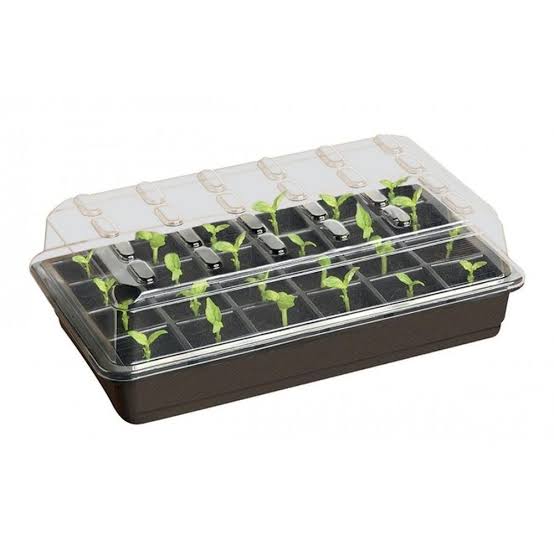
There is no single best tray for every crop, which is why the list above is organised by job. These are the features that separate a tray you'll reuse for years from one that cracks in spring:
- Rigidity: thicker plastic doesn't flex when you lift a wet tray, so cells don't split and plugs don't pop out.
- Drainage in every cell: without it, water pools at the bottom and roots rot.
- A solid base tray: it lets you bottom water and protects your shelves.
- Cell depth, not only width: deeper cells hold more mix and buffer against drying out.
- A dome with adjustable vents: you can lower humidity gradually after germination.
- Standard sizing: a 1020-compatible insert works with shelves, heat mats and grow lights built for that size.
More detail in our seed tray buying guide and cell size chart.
Buying seed trays in the UK
UK garden centres and Amazon.co.uk often list "seed trays" (open trays without cells) separately from "module trays" or "plug trays" (with cells). If you want individual cells, search for modules. Sizes are usually given in centimetres, and full and half-size trays are common. Pair your trays with a peat-free seed compost, which UK gardeners are increasingly encouraged to use.
Best seed starter trays: FAQs
Which seed starter tray is best for beginners?
An all-in-one kit with an insert, base tray and dome. It removes guesswork; you can upgrade to heavy-duty trays once you know what you grow most.
What is the best seed tray for tomatoes?
A deep 32- or 50-cell tray, or start in 72 cells and pot on into larger containers after a few weeks.
Are expensive heavy-duty seed trays worth it?
Usually, if you start seeds every year. They last many seasons, so the cost per cell per season often ends up lower than replacing thin trays.
Did you test these trays?
These picks are research-based rather than hands-on tests. We compare specifications, extension guidance and patterns in verified reviews against the same criteria, and say so clearly.
Where can I buy seed starter trays in the UK?
Garden centres and Amazon.co.uk both stock them; search for module or plug trays if you want individual cells.