Main guide
Seed Starter Trays: The Complete Guide
What seed starting trays are, which type to choose, and how to use them to raise strong seedlings — in one place.
Quick answer
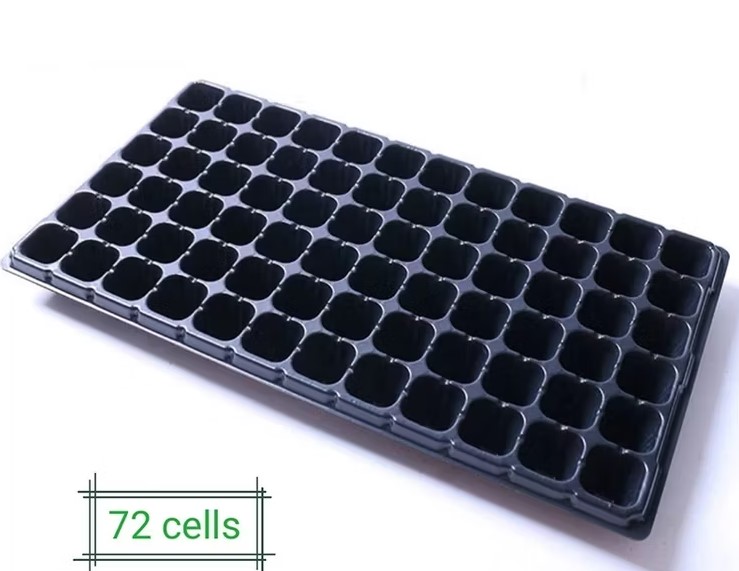
A seed starter tray is a shallow plastic, fibre or paper tray divided into cells, each holding seed-starting mix for one seedling. For most home gardeners, a sturdy 72-cell insert sitting in a solid 1020-size base tray, with a clear humidity dome, is the most flexible starting setup. Choose larger cells for tomatoes, peppers and squash, and smaller cells for lettuce, herbs and onions.
What is a seed starter tray?
A seed starter tray (also called a seed starting tray, cell tray, plug tray or, in the UK, a module tray) is a container system for raising seedlings indoors or in a greenhouse before they go into the garden. Instead of sowing into one open box of compost, each seed gets its own cell. That keeps roots separate, so every seedling comes out as a tidy plug with its root ball intact.
A complete seed starting setup usually has three parts:
- Cell insert — the divided tray that holds the mix. Cell counts range from 6 large cells to 200 or more tiny ones.
- Base tray — a solid tray underneath that catches drainage water and lets you water from below.
- Humidity dome — a clear lid that keeps the surface moist until seeds germinate.
Many kits add plant labels, a heat mat or a capillary watering mat. None of those are essential on day one, but a good base tray and a dome make germination far more reliable.
Why use seed starting trays instead of pots?
You can start seeds in almost any clean container that drains, including yoghurt pots and egg cartons. Purpose-made seed trays win on four practical points:
- Space: a single 72-cell tray fits on a windowsill shelf or under one grow light, yet raises enough transplants for a large vegetable garden.
- Even watering: identical cells dry out at the same rate, so one watering suits the whole tray.
- Clean transplanting: each seedling lifts out as a plug, which means less root damage and less transplant shock.
- Reuse: good-quality plastic inserts can be washed and used for several seasons.
Types of seed starter trays
| Type | Strengths | Trade-offs | Good for |
|---|---|---|---|
| Rigid plastic cell trays | Reusable for years, consistent cells, easy to bottom water | Up-front cost; thin versions crack | Gardeners who start seeds every year |
| Thin disposable inserts | Cheap, light, widely available | Flex when lifted, often last one or two seasons | Trying seed starting for the first time |
| Biodegradable fibre / paper pots | Plant pot and all, less root disturbance | Dry out quickly, single use, can grow mould on the walls | Cucurbits and crops that dislike root disturbance |
| Soil blocks | No cells, roots air-prune, nothing to throw away | Need a blocker and a firm, moist mix; slower to set up | Market-garden style growers, plastic-free setups |
| Self-watering kits | Wick water up from a reservoir, steadier moisture | Can keep mix too wet if overfilled | Busy growers and holidays |
For a deeper look at materials, see reusable vs biodegradable seed trays.
Seed tray sizes and cell counts
In North America most trays are built around the "1020" standard: a base tray roughly 10 × 20 inches that holds one full-size cell insert. Inserts for that footprint are sold as 18, 32, 50, 72, 128 and 200 cells, among others. In the UK you will more often see full and half-size seed trays sold in centimetres, and modular inserts with 24, 40 or 60 cells. Exact dimensions vary between makers, so check that an insert actually fits the base tray you own.
Cell count and cell size work against each other: the more cells in the same footprint, the smaller each one. Smaller cells dry out faster and run out of root room sooner. Our seed tray cell size chart matches common cell counts to crops.
How to choose the right seed starter tray
Ask five questions before buying:
- What will you grow? Fast, shallow-rooted crops (lettuce, herbs, onions) suit small cells. Long-season fruiting crops (tomatoes, peppers, aubergines) want bigger, deeper cells.
- How long will seedlings stay indoors? Six to ten weeks in a tiny cell leads to root-bound, stunted plants.
- Does every cell drain? Drainage holes are non-negotiable. The base tray, on the other hand, should be solid if you want to bottom water.
- How rigid is it? Lift a full, wet tray from one end. If it bends, the cells will crack and spill.
- Will it fit your space? Measure the shelf, windowsill or grow-light footprint first.
The full checklist, including how to read product listings, is in our seed tray buying guide.
How to use seed starter trays
The basic process is the same whatever tray you choose:
- Pre-moisten a fine, free-draining seed-starting mix.
- Fill the cells loosely, level the surface, and tap the tray once to settle it.
- Sow one to three seeds per cell at the depth given on the packet.
- Cover with a humidity dome and keep the tray warm — many vegetable seeds germinate well at around 70–75°F (21–24°C).
- As soon as the first shoots appear, vent or remove the dome and give bright light.
- Water from below so the mix stays evenly moist but never waterlogged.
- Thin to one seedling per cell by snipping extras at soil level.
- Harden off over one to two weeks before transplanting outside.
Each step is explained in detail in how to start seeds in trays.
Watering, drainage and bottom watering
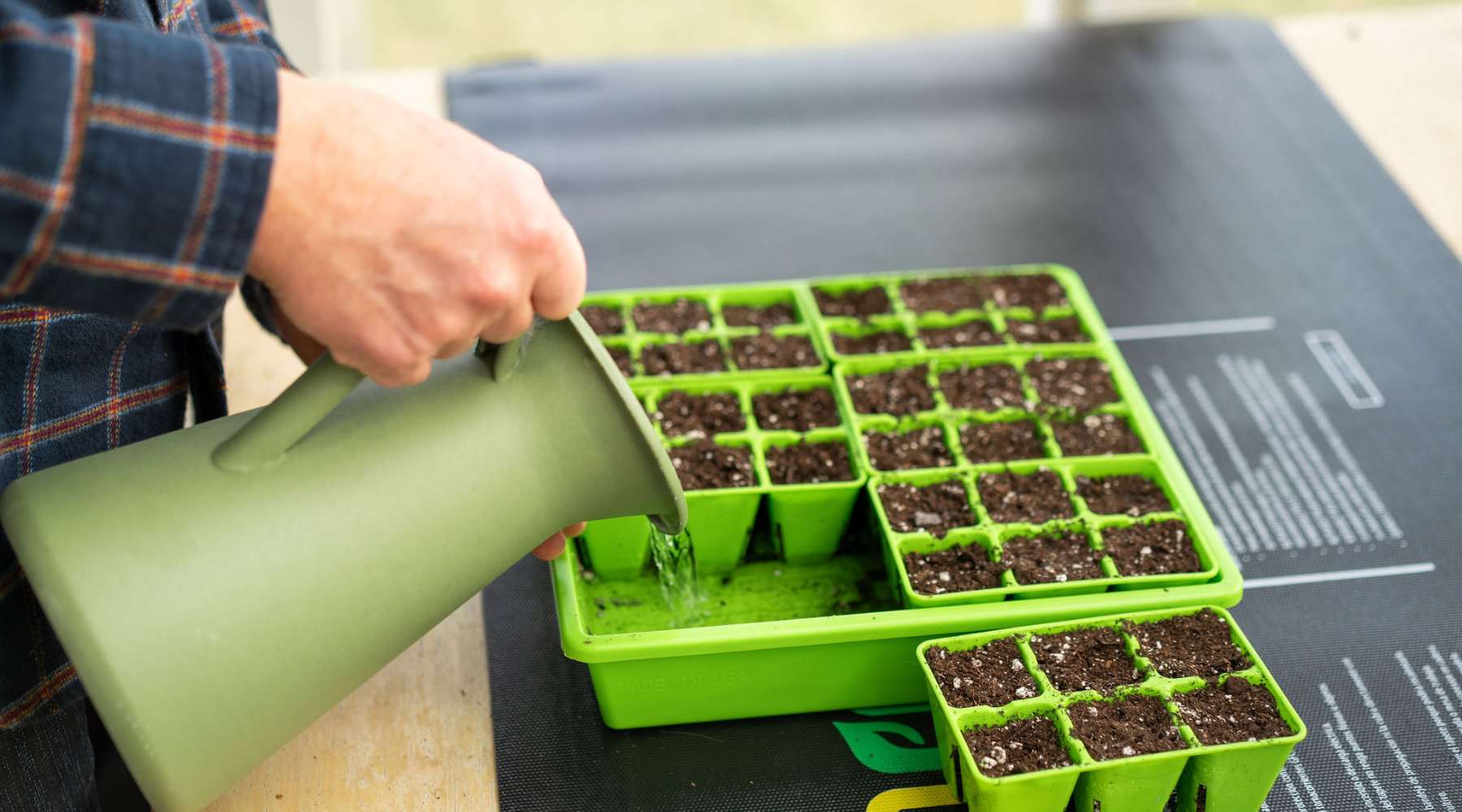
Most seedling losses come from water: too much, too little, or water sitting on the surface. Bottom watering — pouring water into the solid base tray and letting the mix draw it up through the drainage holes — keeps the surface drier and reduces damping-off. Empty any water still standing in the base tray after 20–30 minutes.
Cleaning and reusing seed trays
Reused trays can carry fungal spores from last year's damping-off. Scrub off old compost, wash in hot soapy water, then soak in a dilute bleach solution (roughly one part household bleach to nine parts water) for about ten minutes, rinse well and dry. Our tray cleaning guide covers bleach-free options too.
Common seed tray problems
Mould on the surface, seedlings collapsing at the base, tall pale stems and seeds that never germinate are the four most common complaints. Almost all trace back to light, moisture, temperature or old seed. See seed starting problems and fixes.
Frequently asked questions
What is a seed starter tray?
A tray divided into individual cells, each holding seed-starting mix for one seedling. It sits in a solid base tray and is often covered by a humidity dome until seeds germinate.
What is the difference between a seed tray and a cell tray?
In the UK, a seed tray often means an open tray without dividers, while module or cell trays have individual cells. In the US, seed starter tray usually means a cell tray.
What is a 1020 tray?
A North American standard base tray measuring roughly 10 by 20 inches. Most full-size cell inserts, domes, heat mats and shelving are made to fit it.
Do I need a humidity dome?
It isn't essential, but a dome keeps the surface evenly moist until germination, which makes results more reliable. Remove it once seedlings appear.
Can I use potting soil in seed trays?
A fine seed-starting mix is better. Ordinary potting compost can be coarse and rich, and garden soil compacts and may carry disease.