This page contains affiliate links. If you buy through them we may earn a commission at no extra cost to you.
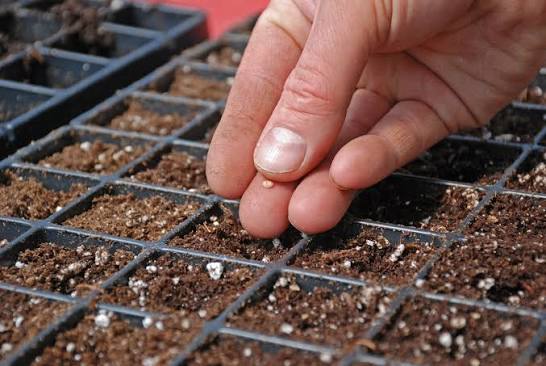
Planting depth is one of the simplest things to get right, and one of the most common reasons seeds fail. Here is a quick guide you can use alongside your seed packet.
The basic rule
Plant a seed about two to three times as deep as the seed is wide. A tiny seed barely needs a covering. A big seed like squash goes deeper. If the packet gives a depth, follow the packet.
Planting depth chart
Approximate depths for common crops. Your packet is more specific to your variety.
| Crop | Depth |
|---|---|
| Lettuce | Surface to ⅛ inch (3 mm). Some varieties like light |
| Basil | ¼ inch (6 mm) |
| Tomatoes | ¼ inch (6 mm) |
| Peppers, eggplant | ¼ inch (6 mm) |
| Broccoli, cabbage, kale | ¼ inch (6 mm) |
| Marigolds, zinnias | ¼ inch (6 mm) |
| Cucumbers | ½ inch (12 mm) |
| Squash, melons | 1 inch (2.5 cm) |
A quick way to measure
Take a pencil, mark the depth you want on it with tape, and use it to poke each hole. Every hole comes out the same.
Seeds that need light
A few seeds need light to germinate. Press them onto the surface and cover very lightly or not at all. Always check the packet for these, since it varies by variety.
What if you plant too deep or too shallow?
- Too deep: seeds may run out of energy before reaching the surface, so germination is slow or patchy.
- Too shallow: seeds dry out, or the seedlings fall over because the roots are not anchored.
How many seeds per cell? Two is a good default. Thin to the strongest seedling once true leaves appear. Snip the extra rather than pulling it, which can damage the roots of the one you keep.
Ready to sow?
Pick up a seed starter tray and put this depth chart to use.
Browse seed starter trays on Amazon